The business case for air delivery – why smart retailers are looking up
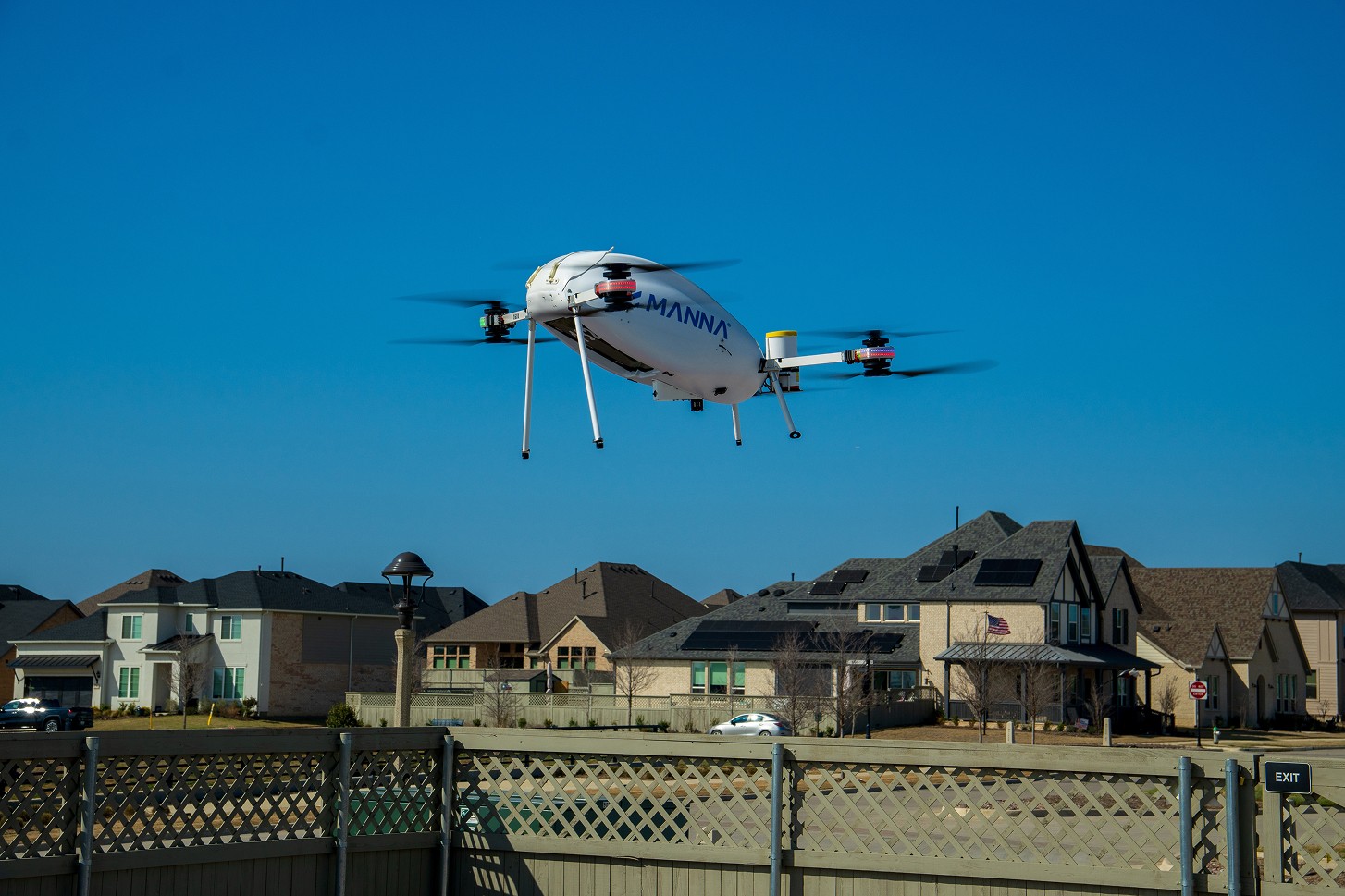
For businesses struggling with the crushing economics of last-mile delivery, salvation may come from above. Air delivery isn't just faster and cleaner – it fundamentally transforms the unit economics that have plagued suburban retail for decades.
The suburban delivery dilemma
McKinsey's analysis paints a stark picture: many restaurants see negative contribution margins after factoring in delivery costs. With traditional delivery costs ranging from $5-7 per order in suburban areas, profitability remains out of reach for most businesses. The numbers simply don't add up when delivery distances are greater and orders less concentrated than in urban cores.
This economic reality limits consumer choice and stunts business growth. But air delivery changes everything.
Transform your bottom line
The numbers speak for themselves:
50% Lower Delivery Costs: Each Manna delivery costs businesses just $5 on average, compared to $9.30 for car delivery. For a business fulfilling 15,000 orders annually, that's $60,000 in savings straight to the bottom line.
8X Higher Throughput: A single Manna aircraft handles eight deliveries per hour. One operator manages 25-30 deliveries per hour versus 2-3 for a traditional driver. This efficiency unlocks a potential 15,000 additional orders annually – almost $400,000 in revenue for the average business.
90% Lower Energy Costs: Each delivery uses just 15 cents in electricity versus $2-3 in fuel, saving businesses $30,000-45,000 annually in energy costs alone.
Expand your market reach
Geographic constraints disappear with air delivery. The same distance a bike courier covers in Dublin, Manna aircraft traverse in 3.5 minutes, opening thousands of new potential customers. Businesses no longer need expensive high-traffic locations – they can serve a massive radius from affordable suburban sites.
Take Gleeson Butchers, a family-run Dublin business. Previously, their delivery logistics were challenging and expensive. Now, customers order their breakfast packs or BBQ selections and receive them within the hour. As Maeve Gleeson explains: "People often only make their mind up for dinner that afternoon, and most delivery services only offer next-day. The immediacy really appeals."
Beyond food: new sectors, new opportunities
Air delivery's economics unlock same-day delivery for sectors previously excluded:
- Retail: Gym+Coffee delivers athleisure wear for last-minute needs
- Specialty items: Kahuna Pops expanded from 40 cafes to 150,000 potential customers with zero infrastructure investment
- Pharmacy: Prescription delivery becomes economically viable
- Groceries: Fresh produce delivered in minutes, not hours
Simple integration, immediate results
The operational simplicity surprises many retailers. Manna's fulfillment bases require just four parking spaces and can be operational in two days. Integration with existing platforms like Just Eat, Deliveroo, and DoorDash means businesses can start serving air delivery customers immediately.
When orders come in, businesses simply drop items at the adjacent Manna base. That's it. No managing drivers, no vehicle maintenance, no insurance headaches.
The platform advantage
Major aggregators are already on board. Deliveroo's Carlo Mocci sees air delivery as essential for suburban expansion: "It unlocks new customers through super-fast deliveries in harder-to-reach locations." Just Eat's Joerg Gerbig confirms it "improves operational efficiency, especially during peak hours."
Your competitors are already airborne
With nearly 200,000 successful deliveries completed and operations expanding rapidly across Europe and the US, air delivery has moved from experiment to competitive necessity. Early adopters like Ian Downes of Kahuna Pops report that Manna has become "one of our biggest customers."
For businesses watching suburban delivery costs eat away at margins, the message is clear: the solution isn't on the roads – it's in the skies. The only question is whether you'll be an early adopter reaping the benefits, or playing catch-up as your competitors soar ahead.