Not your hobby drone – The advanced technology behind Air Delivery
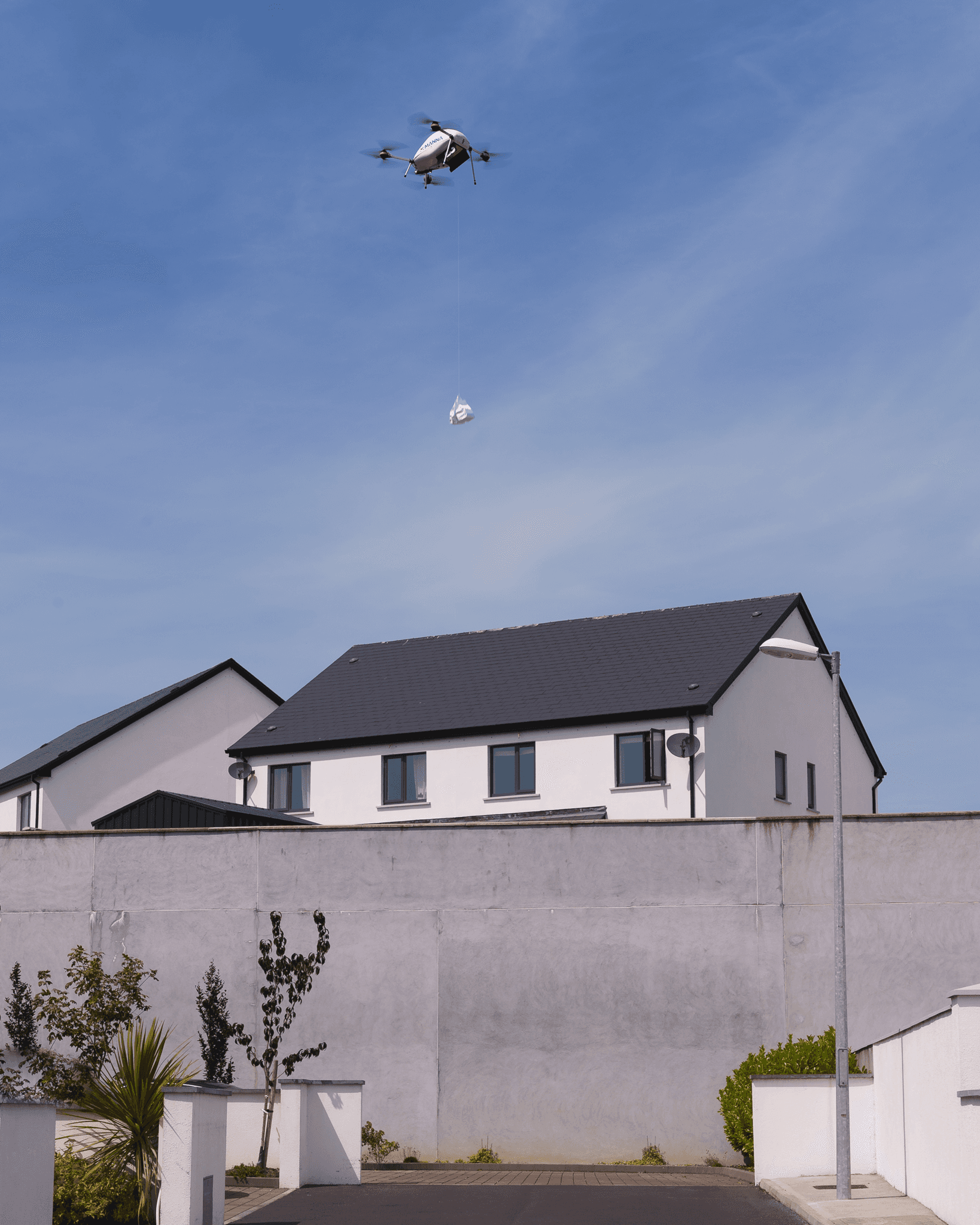
When most people hear "air delivery," they picture the buzzing quadcopters they've seen in their local park or in online videos. But comparing Manna's delivery aircraft to hobby drones is like comparing the technology in a Formula 1 race car to a go-kart. These are sophisticated, autonomous machines built to airline-grade safety standards, designed to revolutionise how we receive everyday goods.
Built for mission-critical operations
Unlike consumer drones that rely on manual controls, Manna's aircraft operate autonomously with ground operators overseeing their flights. They're more akin to self-driving cars than the remote-controlled toys you might see at the park. After seven years of development and 200,000 successful delivery flights, these aircraft have proven they can handle the demanding requirements of real-world commercial operations.
The technology powering these aircraft goes far beyond what's available to hobbyists:
- Triple-redundant safety systems with three flight control computers and sensors ensuring the aircraft remains in flight even if components fail.
- Eight motor pods providing backup propulsion. The aircraft can maintain controlled flight even if multiple propellers fail.
- Airline-grade parachute systems tested to international standards that deploy automatically in emergencies.
- Advanced navigation with inch-accurate delivery and automatic avoidance of no-fly zones around schools, hospitals, and other sensitive areas
Performance that matters
Manna aircraft cruise at speeds up to 50 mph, delivering orders in an average of just 2 minutes and 40 seconds. That's 5.6 times faster than traditional car delivery. Even in the changeable Irish climate, they operate in 97% of weather conditions, handling wind speeds up to 22 mph and heavy rainfall. With a payload capacity of up to 8.8 lb per delivery, they can handle the vast majority of orders that a customer might need delivered quickly.
Quieter than you think
One of the most impressive engineering achievements is the noise profile. Through proprietary propeller designs that are 2.5 times quieter than standard models and coaxial propulsion systems that cancel certain frequencies, Manna aircraft produce just 59 dB in flight, which is quieter than normal conversation and comparable to background traffic noise. Even during the brief 20-second delivery phase when the sound increases to 68 dB, it's still quieter than a household vacuum cleaner.
Trinity College Dublin's acoustic studies confirm that at typical flight altitudes of 200 feet, the sound registers only 5-7 dB above ambient background noise, which is barely perceptible inside homes.
A complete system, not just a drone
What truly sets air delivery apart is the sophisticated ecosystem supporting each flight:
- Automated fleet management that schedules aircraft and optimises flight paths based on real-time conditions.
- Hot-swap battery systems enable eight deliveries per hour per aircraft (four times the industry average).
- Sub-60-second turnaround times keeping aircraft productive.
- Integrated traffic management coordinating with other air delivery services and emergency aircraft.
This isn't just about flying a package from point A to point B. It's about creating a reliable, scalable transportation network that operates with the precision and safety of commercial aviation. With zero serious injuries or fatalities in seven years of operation, Manna's technology proves that the future of delivery isn't just coming, it's already here.