Suburban air delivery - it's not about laziness, it's about access
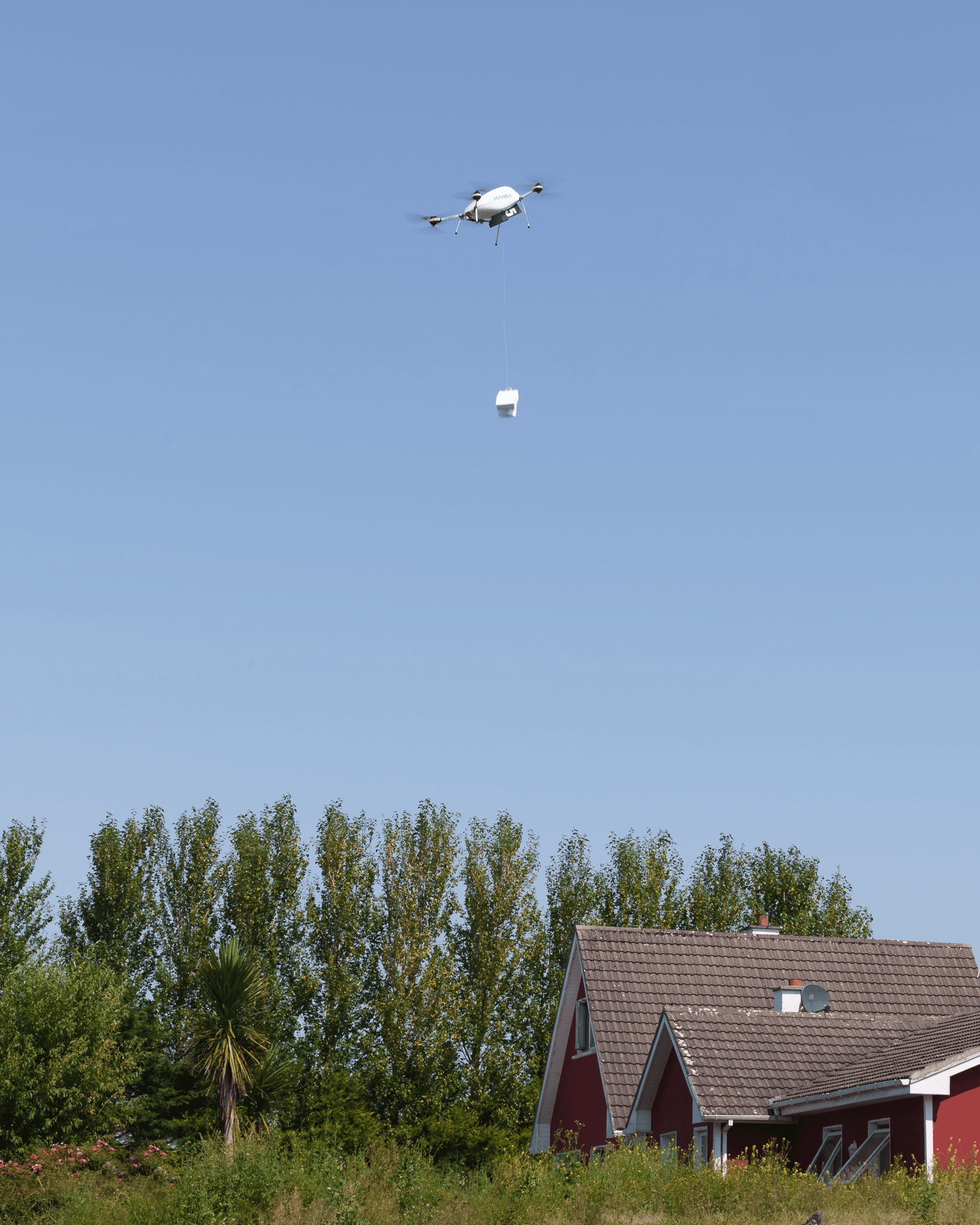
"Why can't people just walk to the store?" It's a question that reveals a fundamental misunderstanding of modern suburban life. Air delivery isn't solving a problem of convenience for the lazy – it's addressing access issues that affect millions.
The suburban reality check
The numbers tell a story many urban dwellers don't realize. According to the US Department of Agriculture, 40% of Americans – roughly 133 million people – live more than a mile from the nearest food store. In rural areas, that distance stretches to 3.1 miles. In Great Britain, 10.2 million people live in "food deserts" poorly served by retail.
The mythical "corner store" where you can grab milk or bread with a five-minute walk? It doesn't exist for vast swaths of suburban and rural communities. This isn't about laziness, it's about the fundamental structure of how our communities are built.
Beyond physical distance
Distance is only part of the challenge. Consider who's most affected:
Elderly residents: Even a short walk can be insurmountable with mobility challenges. One Dublin customer wrote: "I'm a parent to a child with additional needs. Sometimes, even answering the door is too much. Ordering food via drone has been a lifesaver."
Working parents: Juggling jobs and childcare leaves little time for shopping trips. As one customer noted: "We have young kids and Manna is an essential time-saver at weekends."
People with disabilities: Traditional delivery still requires answering doors and interacting with drivers, barriers that air delivery eliminates.
Those without cars: In suburbs designed around car ownership, not having a vehicle means isolation from basic services.
Democratizing the 15-minute city
Urban planners champion the "15-minute city" where daily necessities are accessible within a short walk or bike ride. But until now this vision has been limited to dense urban cores. Air delivery brings urban convenience to suburban sprawl without requiring massive infrastructure changes or dense development.
The transformation is already visible in Dublin's suburbs, where 42% of households in Manna's service area have used air delivery, rising to 60% in some neighborhoods. These aren't just tech enthusiasts or early adopters. They're ordinary families who've discovered a better way to access what they need.
Safety and community benefits
The impact extends beyond individual convenience:
Safer streets: According to University College London, gig economy delivery drivers are significantly more likely to speed, run red lights, or drive distracted. US data shows delivery driver fatality rates exceed those of police officers and firefighters. Every air delivery means one less rushed driver on suburban streets where children play.
Emergency response: In trials with Ireland's National Ambulance Service, Manna delivered defibrillators to cardiac arrest scenes in just 3 minutes and 42 seconds – potentially life-saving speed in underserved areas where traditional response times are longest.
Community connection: Rather than killing local business, air delivery helps suburban businesses compete with big box stores. Small businesses can serve customers across entire suburbs without expensive storefronts or parking requirements.
Addressing real concerns
Yes, there are legitimate concerns. Noise is the most common complaint, though Trinity College Dublin's studies show delivery aircraft produce sound levels comparable to normal conversation—far quieter than lawnmowers or pressure washers that suburbs already tolerate.
Privacy concerns are addressed through strict protocols: aircraft only activate low-resolution cameras during landing for safety, images are immediately deleted, and flight paths automatically avoid sensitive areas.
The future is already here
This isn't theoretical. Dublin resident feedback tells the story:
"I recently moved from Dublin 15 to Dublin 9. I never realized how much time the drone deliveries saved me every week."
"We've been able to get food delivered at such short notice, like when the weather turns out to be amazing and you feel like an impromptu BBQ."
"What a time to be alive! It's progress!"
Air delivery isn't about replacing human interaction or enabling laziness. It's about ensuring everyone, regardless of mobility, transportation access or location, can participate fully in their community. It's about parents getting medicine for sick children without leaving them alone. It's about elderly residents maintaining independence. It's about creating suburbs that work for everyone.
The question isn't whether suburbs need air delivery. The question is how quickly we can make it universally available. Because in communities where 60% of households are already using it, the verdict is clear: this isn't just the future of suburban living—it's an essential service whose time has come.